
Johann Wolfgang Ritter von Kempelen

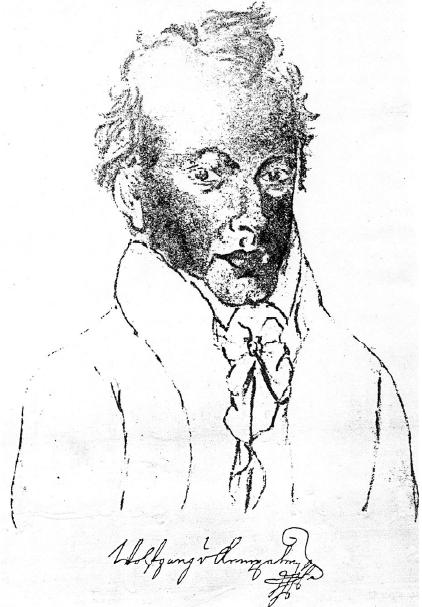
- (b.) 1734 January 23 - (d.) 1804 March 26
Bio/Description
Famous for constructing The Turk, a chess-playing automaton later revealed to be a hoax, Kempelen was also a Hungarian author and inventor with Irish ancestors, born in Pressburg, Kingdom of Hungary, Habsburg Empire (now Bratislava, Slovakia). His family settled in Pozsony/Pressburg in 1640. Kempelen was supposed to have been of Irish ancestry, but the name Kempelen itself is Hungarian. His father was of noble ancestry. He studied law and philosophy in his birthplace, and then in Győr, in Vienna, and later in Rome, though Mathematics and Physics also interested him.
He spoke German, Hungarian, Latin, French, Italian, and later also English. Kempelen started to work as a clerk in Vienna. The Turk was described in an essay by Edgar Allan Poe, "Maelzel's Chess-Player." He also created a manually operated speaking machine, which was a genuine pioneering step in experimental phonetics.
He constructed steam-engines, waterpumps, a pontoon bridge at Pozsony (1770), patented a steam turbine (1788–89) for mills, a typewriter for the blind (1772) for Viennese pianist Teresia Paradis, a theatre house in Buda (inaugurated 25th Oct. 1790) (now Budapest), and the famous fountains at Schönbrunn, Vienna. The reconstruction of the demolished Buda castle was also partly led by Kempelen.
He was also a talented draughtsman and etcher, and wrote poems and epigrams. He composed a singspiel, Andromeda and Perseus, which was performed in Vienna. The Wolfgang von Kempelen Computing Science History Prize was named in his honor.
Citations:
-
Date of Birth:
1734 January 23 -
Date of Death:
1804 March 26 -
Gender:
Male -
Noted For:
The Wolfgang von Kempelen Computing Science History Prize was named in his honor, but he was most famous for his construction of The Turk, a chess-playing automaton, later revealed to be a hoax – He also created a manually operated speaking machine -
Category of Achievement: