
Stephen (Steve) Byram Furber

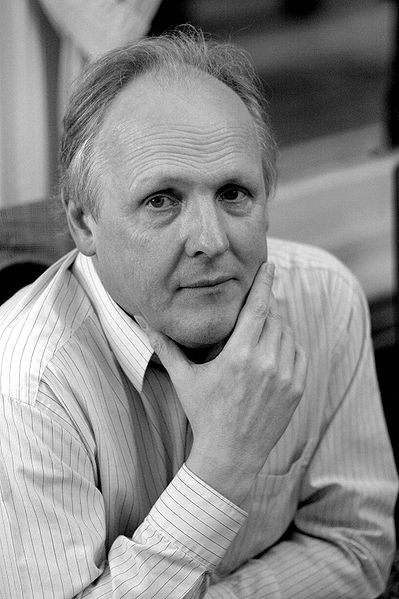
- (b.) 1953 March 21
Bio/Description
Principal designer of the BBC Micro and the ARM 32-bit RISC microprocessor, Furber is probably best known for his work at Acorn Computers. He was educated at Manchester Grammar School and represented the UK in the International Mathematical Olympiad in Hungary in 1970, winning a bronze medal. He went on to study the Cambridge Mathematical Tripos at St John's College, Cambridge, receiving a Bachelor of Arts degree in Mathematics in 1974.
In 1978, he was appointed the Rolls-Royce Research Fellow in Aerodynamics at Emmanuel College, Cambridge and was awarded a Ph.D. in 1980 on the fluid dynamics of the Weis-Fogh principle. From 1980 to 1990, Furber worked at Acorn Computers where he served as a Hardware Designer and then Design Manager. While at Acorn, he was a principal designer of the BBC Micro and the ARM microprocessor. In August 1990 he moved to the Victoria University of Manchester to become the ICL Professor of Computer Engineering and established the Amulet research group.
In 2003, he was a member of the EPSRC research cluster in biologically-inspired novel computation. The Engineering and Physical Sciences Research Council (EPSRC) is a British Research Council that provides government funding for grants to undertake research and postgraduate degrees in engineering and the physical sciences (including mathematics, artificial intelligence and computer science), mainly to universities in the United Kingdom. On September 16, 2004, Furber gave a speech on Hardware Implementations of Large-scale Neural Networks as part of the initiation activities of the Alan Turing Institute.
His later work has included a project known as SpiNNaker (Spiking Neural Network Architecture), also nicknamed the "brain box," constructed at the University of Manchester. This has been an attempt to build a new kind of computer that directly mimics the workings of the human brain. SpiNNaker is essentially an artificial neural network realized in hardware, a massively parallel processing system eventually designed to incorporate a million ARM processors. The finished SpiNNaker is intended to model 1% of the human brain's capability, or around 1 billion neurons.
The SpiNNaker project has aimed, amongst other things, to investigate how massively parallel computing resources could accelerate understanding of brain function, and how a growing understanding of brain function could point the way to more efficient parallel, fault-tolerant computation. Furber has believed that "significant progress in either direction will represent a major scientific breakthrough." His research interests have included asynchronous systems, ultra-low-power processors for sensor networks, on-chip interconnect and globally asynchronous locally synchronous (GALS), and neural systems engineering. A significant part of his research has been funded by grants awarded by the EPSRC.
In February 1997, he was elected a Fellow of the British Computer Society. In 1998, he became a member of the European Working Group on Asynchronous Circuit Design (ACiD-WG). In 2002, Furber was elected a Fellow of the Royal Society and served as Specialist Adviser to the House of Lords Science and Technology Select Committee inquiry into microprocessor technology. He has been a Fellow of the Royal Academy of Engineering, the IEEE (2005) and the IET, and a Chartered Engineer.
In September 2007 he was awarded the prestigious IET Faraday Medal, and in 2010 he gave the IET Pinkerton Lecture. He was appointed Commander of the Order of the British Empire (CBE) in the 2008 New Year Honours and was elected as one of the three laureates of the Millennium Technology Prize in 2010 (with Richard Friend and Michael Grätzel), for development of the ARM processor. In 2012, Furber was made a Fellow of the Computer History Museum "for his work, with Sophie Wilson, on the BBC Micro-computer and the ARM processor architecture." Actor Sam Philips played him as a young man in the BBC Four documentary drama Micro Men, which was first aired on 8 October 2009.
Citations:
-
Date of Birth:
1953 March 21 -
Gender:
Male -
Noted For:
Principal designer of the BBC Micro and the ARM 32-bit RISC microprocessor -
Category of Achievement: