
David (Kitping) K. Lam

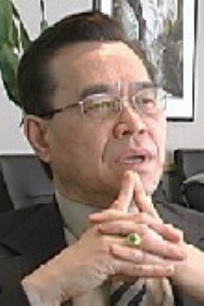
Bio/Description
Co-inventor of a plasma-produced solid lubricant patented under the title "Fluorine Plasma Synthesis for Carbon Monofluoride," Lam is also the founder of Lam Research Corporation. He has served as Chairman of Multibeam Corporation (Santa Clara, CA), which manufactures complementary electron beam lithography (CEBL) systems. He also headed the David Lam Group, an investor and business advisor for high-growth technology companies.
Born in Guangdong, China, he spent his early childhood in Cholon, Ho Chi Minh City in South Vietnam, a large "Chinatown" near Saigon (renamed Ho Chi Minh City). His family, which fled from China to South Vietnam in the 1940s, eventually grew to include seven brothers and one sister. As their new home in Vietnam became an increasingly dangerous place to live in the mid-1950s, his parents moved most of the family to Hong Kong. Lam's interest in math and science grew during his teenage years there.
After graduating from high school, he boarded a ship to North America, where he subsequently pursued studies in Engineering and Physics at the University of Toronto. He received his Bachelor of Applied Science in Engineering Physics from the University of Toronto in 1967. During his undergraduate years, he performed Nuclear Physics research under Professor Derek Paul and co-authored a paper on Electron-Positron Annihilation in 1967. He earned his M.S. degree and Sc.D. degree (Chemical Engineering) in 1970 and 1973, respectively, from the Massachusetts Institute of Technology.
During his post-graduate years, Lam was a co-inventor of a plasma-produced solid lubricant that was patented under the title "Fluorine Plasma Synthesis for Carbon Monofluoride." His doctoral research included a paper titled "A Mechanisms and Kinetics Study of Polymeric Thin-film Deposition in Glow Discharge," published later in the Journal of Macromolecular Science—Chemistry (1976). After graduating from MIT, he worked on plasma etching research and engineering at Texas Instruments and Hewlett-Packard.
Although plasma etching was widely used in R&D during the 1970s, it had yet to prove practical in a production environment. Lam discovered the cause of etch variability was part technical and part human. The analog-controlled process lacked the precision required by the complex chemistry of plasma etching. Moreover, well-intentioned operators without authority often changed process settings that affected etch results.
He envisioned a new type of production-grade plasma etcher that enabled: digital control of process parameters to enhance accuracy and repeatability; etching one wafer at a time in a small, load-locked environment to minimize ambient contamination and process variation; and total system automation to improve reproducibility and reduce human error. His approach was to provide the best controlled environment in which etching took place by doing one wafer at a time, and to provide load locks to isolate the wafer from the environment and from the ambient, thus minimizing contamination by particles or moisture in the air, or oxygen. He emphasized contamination control and a reproducible environment.
Two additional innovations he introduced were a high degree of automation through a microprocessor that controlled the entire equipment—doing away with analog controls, dials, and switches, with everything displayed on screen for the first time in the industry—and the ability to store process recipes in a module called the "process recipe module." This module stored the optimized conditions worked out by engineers, so that operators who were typically not engineers could not accidentally or unauthorizedly change those conditions, giving engineers far better control over process settings. The third innovation was the use of a modem for remote diagnostics; Lam was the first to use that communication device in support of customers.
These combined advances made the equipment more user-friendly, more reproducible, and more acceptable to managers responsible for producing chips in a reliable and repeatable way. With seed capital provided by his widowed mother, he founded Lam Research Corporation in 1980 and demonstrated a fully automated working etcher about a year later. Under his guidance, the early-stage venture gained a foothold in Japan and endured a double-dip recession. In 1984, Lam became the first Asian American to see the company he founded go public on the NASDAQ exchange.
After leaving Lam Research as a full-time employee in 1985, he served on the eponymous company's Board for five consecutive years. He engineered the turnaround of Link Technologies, a computer-terminal company that was sold to Wyse Technology in 1987. He also led software development and marketing at ExpertEdge, and later formed the David Lam Group in 1995 to provide management advice and investment capital to early-stage ventures as well as established companies in transition.
Lam has served as Chairman of Multibeam Corporation, which pioneered the development of CEBL (complementary electron beam lithography) systems. As conventional optical lithography reaches its limits, the required photomasks become very expensive. CEBL systems can be incorporated into existing optical lines to reduce the number of expensive photomasks required for certain critical layers. He has also served on the boards of private companies, including Microfabrica and Qcept.
In addition to his corporate experience, Lam was appointed by President George H. W. Bush to serve on the U.S. Commission on Minority Business Development, and by California Chief Justice Malcolm Lucas to serve on the Commission on the Future of the Courts. He has served as an advisor to President Bob Caret of the California State University at San Jose and has served on the Visiting Committee of MIT. He has been a Senior Fellow of the American Leadership Forum and a member of the Board of Directors of the National Conference for Community and Justice of Silicon Valley (NCCJ). In 2013, he was inducted into the Silicon Valley Engineering Hall of Fame.
Citations:
-
Gender:
Male -
Noted For:
Co-inventor of a plasma-produced solid lubricant that was patented under the title, “Fluorine Plasma Synthesis for Carbon Monofluoride" -
Category of Achievement: